
The user is looking for a ready-made, vetted list of specific stocks to buy - not
general education about gold. They want to know which companies are currently the
best and why. They are typically at the decision-making stage, not just exploring the
topic.
The user is looking for a ready-made, vetted list of specific stocks to buy - not
general education about gold. They want to know which companies are currently the
best and why. They are typically at the decision-making stage, not just exploring the
topic.


Gold stocks worth watching in 2026 include several large gold mining companies such as: Newmont, Wheaton, Barrick Gold, Agnico Eagle, AngloGold Ashanti, or Franco-Nevada, but
they do not all work in the same way. Some operate mines directly, while others use models such as royalty streaming, which creates different risk and return profiles. Gold mining stocks
can react differently to changes in gold prices, operating costs, and geopolitical conditions - usually amplifying price moves triggered by gold volatility in both directions.
Key Takeaways
- Gold stocks may form part of a diversified, strategic portfolio, as well as play a role in a more concentrated, precious metals–focused investment approach
- Mining companies differ more in business model and risk exposure than in simple production size, which affects how they respond to gold price changes.
- Gold mining companies usually earn more when gold is more expensive but are influenced by company-specific factors such as debt, costs, reserves, or geographic operations.
- Some of the best gold stocks represent different structures, including traditional miners like Newmont Gold and royalty-based companies such as Franco-Nevada, which can behave differently in the same market conditions.
What are gold stocks?
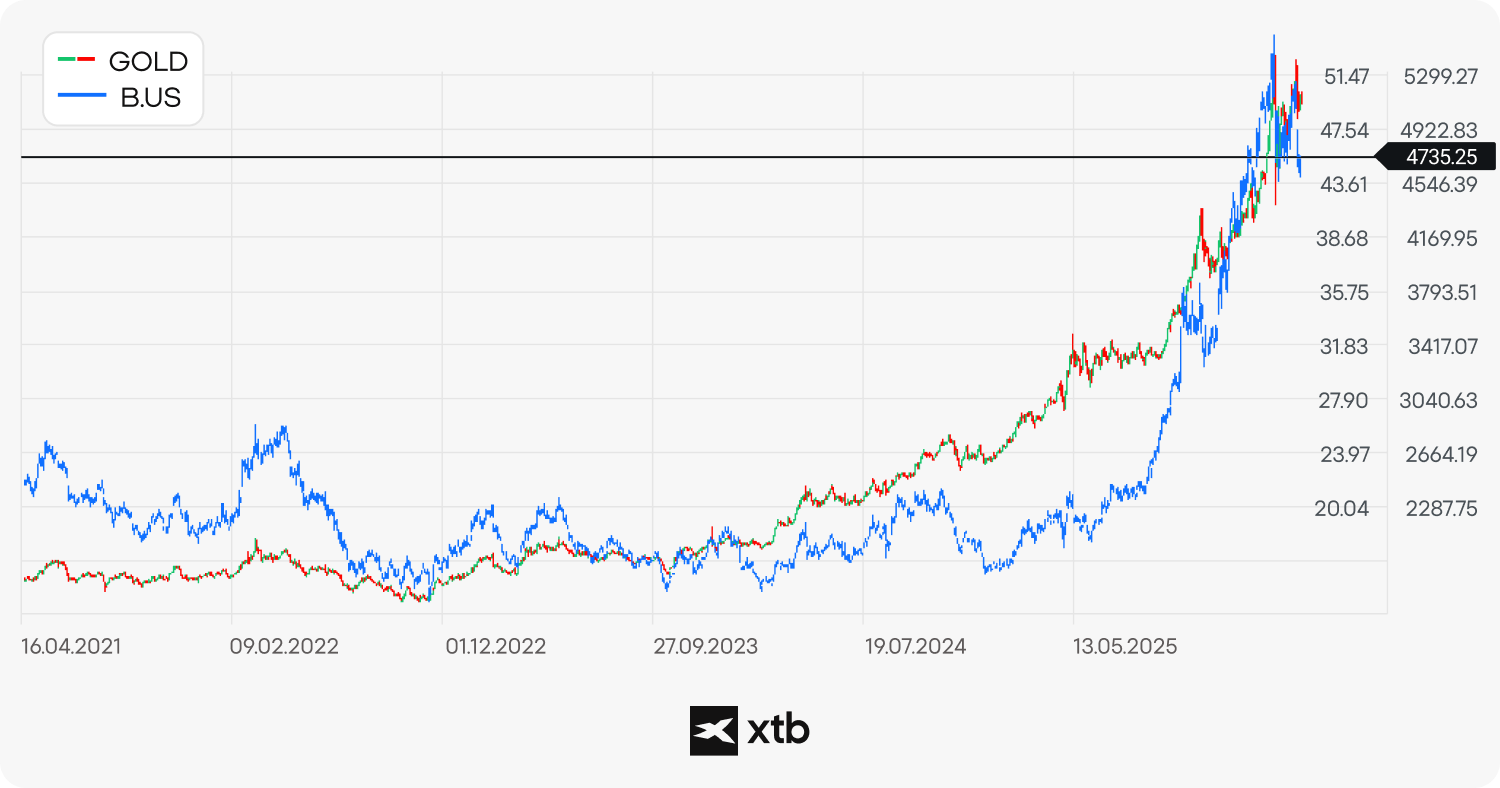
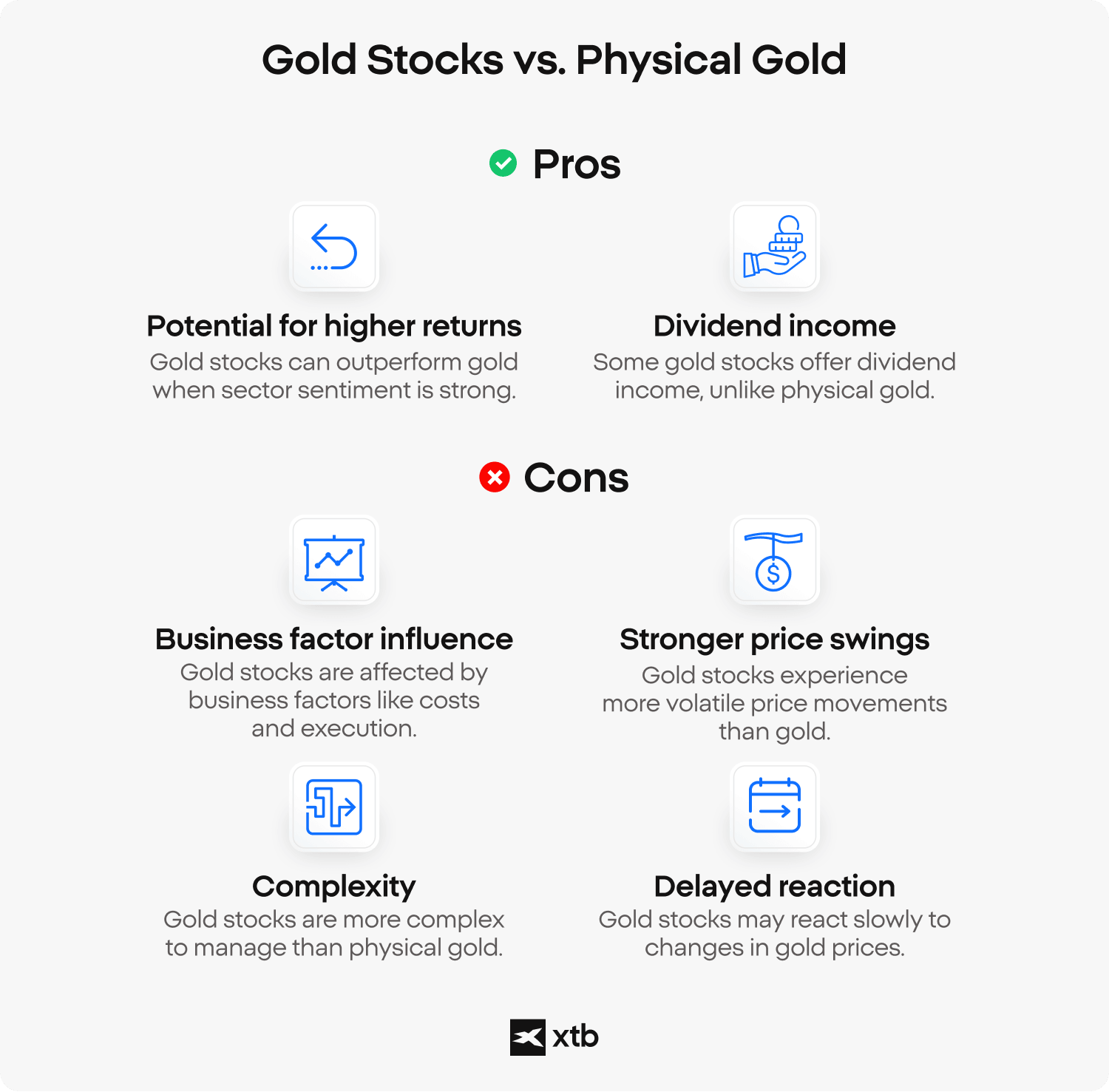
Gold stocks are shares of companies that generate revenue from gold, including mining companies as well as royalty and streaming firms. These businesses either produce gold directly or finance mining projects in exchange for a share of production or revenue. Gold stocks therefore offer exposure to the gold sector through company performance rather than direct ownership of the metal. The main difference compared with physical gold is that gold stocks usually show stronger price swings. They can rise more than gold when the sector is supported by strong margins and positive sentiment, but they may also react with a delay to higher gold prices.
In weaker market conditions, or when sentiment around gold deteriorates, gold mining stocks often fall more sharply than gold itself. Another difference is that some gold mining companies
may pay dividends, while physical gold does not generate income. At the same time, gold stocks are influenced by business factors such as costs, execution, and regional exposure, which makes them more complex than holding the metal alone.
What are the best gold stocks to watch in 2026?
Gold stocks in 2026 are no longer proxy for the metal, but a strategic move on capital allocation amid one of the strongest in history precious metals bull market cycle. The best names tend to combine exposure to rising gold prices with high-quality asset bases. The table below highlights companies that stand out for how they are positioned across the current market conditions.
- Newmont Corporation (NEM) – Newmont operates one of the largest and most diversified portfolios in the sector, which supports relatively stable production across cycles. Its balance sheet has historically carried moderate debt levels, while margin trends tend to reflect both scale advantages and sensitivity to rising operating costs.
- Barrick Mining (GOLD) – Barrick focuses on large, long-life assets and has emphasized reducing net debt in recent years, improving financial flexibility. Its margins are closely tied to cost discipline at flagship mines, which means operational efficiency plays a central role in performance.
- Agnico Eagle Mines (AEM) – Agnico Eagle is known for operating primarily in lower- risk jurisdictions, which can reduce geopolitical uncertainty. The company has shown relatively consistent cost control, although maintaining margins depends on balancing stable production with ongoing capital investment.
- AngloGold Ashanti (AU) – AngloGold combines operations in both developed and emerging markets, which introduces a broader mix of geopolitical exposure. Its financial profile reflects ongoing portfolio adjustments, and margin stability can vary depending on regional cost pressures and restructuring efforts.
- Franco-Nevada (FNV) – Franco-Nevada operates as a royalty and streaming company, which means it does not manage mining operations directly but earns revenue from a diversified portfolio of agreements. Its financial profile is typically characterized by low debt and high margins, while performance depends on the quality and diversification of underlying assets rather than operational cost control.
- Wheaton Precious Metals (WPM) – Wheaton does not operate mines, which results in a structurally different cost profile with lower direct exposure to inflation in operating expenses. Its balance sheet is typically less burdened by debt compared to traditional miners, while margins are influenced by contract terms rather than day-to-day mining costs.
The best gold stocks to watch in 2026 are typically evaluated based on production scale, cost discipline, balance sheet strength, and exposure to different mining jurisdictions. Investors
should know what affects gold prices in 2026: rising deficits of world-biggest countries, geopolitical tensions, Fed interest rate expectations and record-high global M2 money
supply. The same factors support fundamentals of gold stocks in 2026. Several widely followed gold mining companies are often included in discussions about gold stocks to watch, as they
represent distinct operating models and financial profiles:
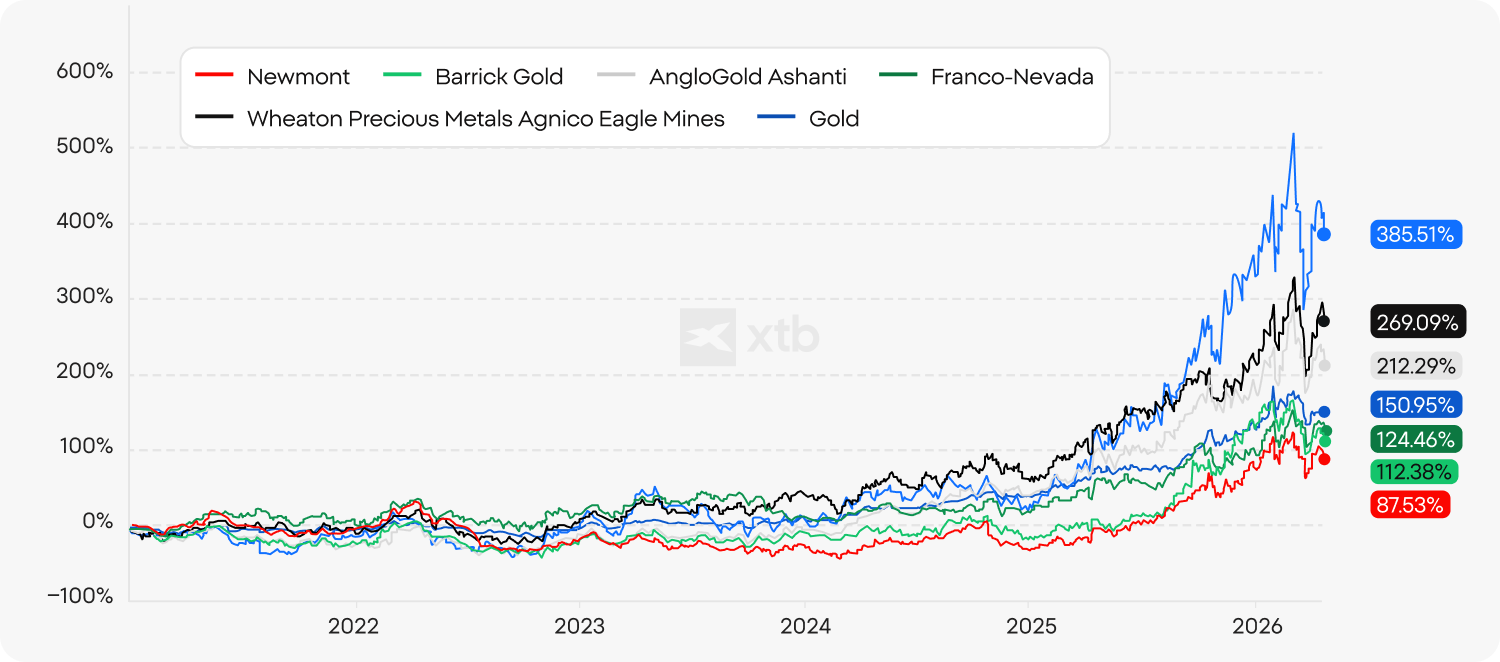
Looking at the chart below, we can see that since the 2021 the return on investment from holding stocks of Franco - Nevada, Barrick Gold and Newmont underperformed Gold itself.
Wheaton Precious Metals, AngloGold Ashanti and Agnico Eagle Mines surged much higher than gold, with AngloGold rising 385% since the beginning of 2021. However, looking at the
rebound from the 2025 bottom of Newmont, Barrick and Franco Nevada stock, the performance measured in % is much better than gold in the same given period. All that gold stocks
outperformed the S&P 500 and Nasdaq 100 indices - both surged respectively 60% and 80% in the given period - since the beginning of 2021.
What are the main risks of gold stocks that beginners often overlook?
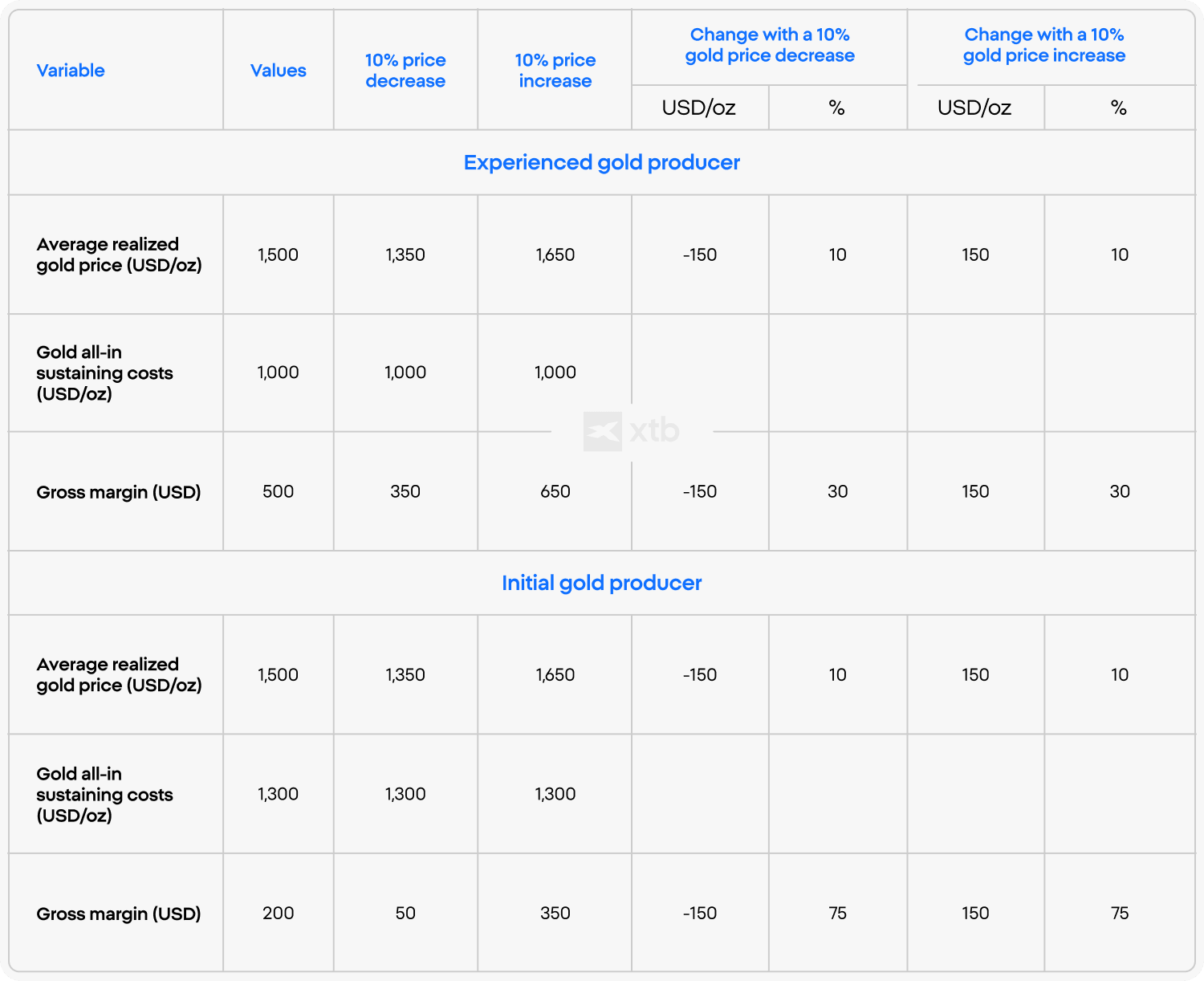
Gold stocks can fall faster than many beginners expect because operational leverage works in both directions. When margins improve, mining shares may respond strongly, but when costs
rise, production disappoints, or gold declines - the downside move may be big. This makes gold mining companies more sensitive than physical gold to change in business conditions or a
perception of such.
Geopolitical and operational risks are also central to the sector. Mines can be affected by permitting delays, tax changes, local disruptions, or weaker execution, while rising energy costs
can directly reduce margins even if the gold price remains supportive. Management quality matters for the same reason, as poor capital allocation or weak project delivery can damage
performance independently of the broader market.
One of the most common surprises is that gold stocks can lose value even when gold is rising. That usually happens when higher gold prices are offset by weaker margins, operational
setbacks, or company-specific problems, which shows that mining shares do not track the metal in a simple one-to-one way.
FAQ
Not exactly, and this difference is more important than it may seem at first. Gold stocks represent operating businesses, not the metal itself, which means their value depends on both gold prices and company performance. They can be more volatile than gold and may not always move in line with the metal, especially over shorter periods.
The differences usually come down to a combination of structure, cost base, and geographic exposure. A company with low production costs and assets in stable regions may behave very differently from one facing higher costs or operating in more complex jurisdictions. Balance sheet strength and management decisions also play a key role, which means companies in the same sector can deliver very different results.
No, and this is one of the most common misconceptions. A higher gold price can support revenues, but what matters more is whether margins improve at the same time. If costs rise
alongside gold prices, the benefit may be limited or even offset, which can lead to weaker stock performance.
Dividends are more common among larger, established producers, but they are not guaranteed. Payments depend on profitability, capital needs, and long-term project planning, which can
change over time. Smaller or growth-focused companies often prioritize reinvestment over consistent distributions.
These companies do not operate mines directly, but instead earn revenue through agreements with mining operators. This reduces direct exposure to operational risks such as cost inflation or production issues. However, their performance depends on the quality and diversification of underlying contracts, which creates a different type of dependency compared to traditional miners.